Writing, promotion, tips, and opinion. Pour a cuppa your favorite poison and join in.

Wednesday, January 20, 2016

How I Got My Agent: Gina Denny

The very sweet Gina Denny was kind enough to share her "How I Got My Agent" story. This story was originally posted on her own blog back in February 2015 right after she signed with her agent. You can read her original post HERE. Thank you, Gina!


****

Not to give away the ending or anything, but the post sort of sums it all up. If you want the quick and dirty details:

I've officially signed with Kirsten Carleton of Waxman Leavell Literary. 

Pitchwars was involved and she originally contacted me via a PitMad event this past summer. 

That's the short version. 

Here's the long version: 

I started querying my first novel, SNOW FALLING, in the summer of 2013. As I was putting the finishing touches on that novel, I had the idea for what would eventually become SANDS OF IMMORTALITY. When I talked to other people, everyone said, "Write that book instead. That's way better than the Snow White one." 

I queried the Snow story anyway and racked up a whole lot of rejections, as would be expected. I wrote the next book - which is loosely based on Sleeping Beauty - and kept moving forward. I started writing in November of 2013, and in fact this novel was the only time I ever finished NaNoWriMo. 

In the late summer of 2014, I started querying SANDS OF IMMORTALITY. I entered it into some twitter pitch contests, one of which was the #PitMad contest. Kristen requested my work based on this pitch: 

Her mother's cryptic journal. An ancient spell. A prince on the run. Waking Sleeping Beauty was simpler when it was just a dragon


At the time, however, Kirsten worked for an agency that required exclusives. My query was with five other agents, and one already had a full manuscript, so I had to hold off on querying Kirsten.

Then came PitchWars. I entered. I was chosen by Mina Vaughn and we worked on my manuscript. When it was all done, I started querying. I got requests back immediately, so I felt really confident in my work. By this time, Kirsten was working for Waxman Leavell. They didn't require exclusive submissions, so I queried her with the new manuscript. She responded pretty quickly (next day, actually) asking for a partial, and then the next week asking for a full.

Then the holidays started.

And publishing slows to a crawl during the holidays and I sat, staring at an empty inbox for about four weeks.

Let me tell you, THAT was the agonizing part. Having fulls and partials out, knowing that everyone was enjoying time with their families and I wouldn't hear anything for weeks and weeks.

Anyway...

Kirsten emailed me last week, offering representation. We spoke on the phone and it was just easy. I'm not big on phone calls in general, but she had an excellent idea for tweaking my ending a bit. I was exceptionally nervous about this because my ending is definitely not a Happily Ever After, and it's not for everybody. But she doesn't want it to be a Happily Ever After, she just saw a way for it to be bittersweet in a more realistic and powerful way.

That sold me.

She got my book and my reasons for doing it the way I did. She liked the ideas for the whole series and wanted to work with me all the way. I was sold already, but I wanted to do the right thing and make sure I had all the information before I made a permanent decision, so I contacted everyone else who had my work. Two more agents requested fulls (one had a partial already, one only had the query), and I sat and I waited, refreshing my inbox like a crazy person for ten days.

But here we are. Today, I signed the contract and I am officially represented by Kirsten Carleton. I'm so excited to make some changes and to make this book the best book I can produce and eventually work towards putting it on some shelves!

For those who like the stats:


First manuscript:
Queries sent: 70
Requests: 10 (including partials, fulls, and 2 R&Rs that asked for wildly different things)
Months on the query circuit: 15

Second manuscript:
Queries sent: 27
Requests: 10 (including partials and fulls)
Months on the query circuit: two, then a break for PitchWars, and then three more, for a total of five. 


Gina Denny is a homeschooling mom to four very noisy boys and part-time band and orchestra director. In both settings, she talks a little too much about Harry Potter. She has a bachelor's degree in business, a master's degree in education, and once stood in line for NSYNC tickets for just over fourteen hours. She loves live music, hiking, overly silly sitcoms, and burritos. She writes fantasy for grown-ups and lives and works in the Phoenix area. Visit Gina's website at ginadenny.blogspot.com and follow her on Twitter at @ginad129.

Monday, January 18, 2016

How I Got My Agent: Tiana Smith

Today we are super lucky to have the lovely Tiana Smith here to share her "How I Got My Agent Story." This series has been pretty popular in the past, so I'm excited to have another weeks worth of awesome author/agent stories.

Take it away, Tiana!
***
While I've been writing for years, I didn't query my first couple of books because they were just that bad. Take my word for it. But my third book felt different. It had more life to it and I was completely invested in it, heart and soul. I sent it into the world and was pleasantly surprised when positive feedback started pouring in. Queries turned into partial requests, then full requests, some R&Rs and even talking with a few agents on the phone. But still, no offers.

I can't describe how incredibly disheartening it is to speak with agents (plural) on the phone and get SO FREAKING CLOSE, only to walk away to the same place you started. It was like competing in the Olympics and leaving without a medal. So super close, but still .003 seconds away. This went on for months and months. And months. I put the book away and waited until I felt ready to try again.


When I finished my next book, I slowly dipped my toes into the query trenches again. I started with the agents who had expressed interest, and as before, the requests came pouring in. This time, it wasn't exciting. It was dreadful. Each request was like a punch to the stomach, because I knew from experience it would end in rejection. I widened my umbrella and queried more agents. After a few months, I decided to send it to a mid-sized publisher who accepted non-agented proposals.

I was incredibly surprised when they made me an offer, and I wasn't sure how to react. I contacted the agents to let them know about the offer. Suddenly it was a flurry of activity as agents rushed to read my book. I got more requests in those two weeks than I'd had in months of querying, and that's saying something. There's no surer way to get an agent's attention than by telling them of someone else's interest. It was crazy. Surreal that querying could take so long, only to have everyone want it at once.


Rachel Marks called me the very next morning after I let her know about the offer of publication. At first, I wasn't even sure if she was offering representation. I'd talked with agents on the phone before, only to have them request revisions. I was a mess of nerves on the phone call with her, but she actually got my book. The changes she put forward meshed with my vision for it. Her personality and mine matched well. Anyone who likes Disney is a friend of mine ;) She recommended I turn down the offer of publication so we could pursue other options, which was what I really wanted.

As other agents came forward, I kept comparing them to Rachel. I knew she wanted what was best for me, my book and my career. I signed with her not long after that and now I'm working on revisions. So, it's been a long process. Longer than I would have liked, but honestly, I am incredibly happy with how things have worked out so far. Full speed ahead!

*     *     *


Tiana Smith is a young adult author represented by Rachel Marks of Rebecca Friedman Literary. She makes a mean box of Mac & Cheese and likes to play around with graphic and web design. She firmly believes in happily ever afters and is married to her own Prince Charming. She doesn't blog a whole lot, but when she does, it's at tianasmith.com. She loves to connect online:


Friday, January 15, 2016

Your turn

Today I hope you'll share what you're working on - even if it's the same thing you were working on last time we spoke:


  1. Working Title if it has one
  2. Genre
  3. Intended Age group
  4. Word count
  5. One of the main characters; tell us something about him/her in one short paragraph.
  6. Were are you in the story? What are the characters doing?
  7. What scene in the future are you looking forward to writing (or have you already written it?)
  8. What about this particular story are you finding difficult to write?
  9. What do you love about this story?


Here are my answers:

1. Bell, Black, & Briar
2. Fantasy
3. Adult
4.  35,824 (I was at 10k last time we spoke - I might be close finishing next time...)
5.  Inspector Ian Beck of the Arcane Crime Unit (ACU for short, you know, kind of like the BAU).  Although considered a loner by his superiors, Beck has good reason to keep to himself, possessing the ability to know a lie when he hears one. This makes relationships difficult at best.
6.  My characters have just found another clue to the killer's identity at Gravesend Cemetery: a Tarot card that may have the killer's prints on it.
7. I'm looking forward to the scene where the killer and one of my characters interact. Needless to say I can't say more (spoiler!)
8.  I've never written a murder mystery before, and keeping track of all the clues I've laid down and what still needs to be investigated has been difficult. 
9. I really love my characters, and the setting, which is a city not unlike Boston, or London, or perhaps Ankh-Morpork, in which the supernatural/paranormal exists, is normal and sometimes messy.  


Now go forth and write good stuff :) 

Wednesday, January 13, 2016

The Path Not Taken


Monday I mentioned the site Writer Unboxed, which I find extremely helpful, funny, inspiring, and probably one of my most favorite sites about the craft and business of fiction. I found this recent post exceptionally helpful: The Storyteller and the Roads Not Traveled. In it the author talks about the paths our characters can take and the questions we can ask to help determine which path is the best. Hint: It's never the easy one.


  • Which path actually raises the stakes? Go with that one.
  • Which path is going to take pressure off the main character? Avoid it.
  • Which path is going to pull the narrative action away from the main characters that the reader is invested in? If possible, redirect so that the action belongs, more closely, to a main character.
  • Which path is more visually compelling?
  • Is your character pulling you hard down a certain path? This is important. Sometimes characters know why they need to do what they need to do long before you do.  A character telling you her story – voice – can carry a novel and truly make your decisions incredibly clear. Someone else is making them for you.
  • Which path scares you? Fear is a positive indicator.
  • Is there a path you’re dying to write? Prize that one. 


 Friday, I'll be back with more questions for you and your characters.


Monday, January 11, 2016

Building Better Characters - and Stories

 Last time I was here we talked about the questions we can ask our characters in order to make them better, something I'm a big fan of.  Since then I found an interesting post onThird Level Emotions written by Donald Maass for Writer Unboxed, one of my favorite sites about the craft and business of fiction. I wrote this post for my other blog mainewords but I thought it was worth sharing here again.


"Start by picking any moment in your story when your protagonist (or any other character) feels something strongly. What is that feeling. Write it down, Now, pause at that moment. As what else does this character feel simultaneously? Write that down. Next ask, what else does my character feel at this moment. This third level emotion is our focus." 

In my current tale there are three estranged sisters who have brought together by their mother's murder. One of the sisters, the oldest, is Alice so I did the exercise for her first. At the beginning of the story Alice is devastated (first level emotion) by the news of her mother’s murder. Not only does she love her mother as her mother but also as a friend. But what else does Alice feel simultaneously? Anger (second level emotion) at whoever did it. How could they? Why? What’s wrong with people? She hopes they rot in hell forever.  Next ask, what else does Alice feel at this moment? Afraid. (third level emotion) Her mother has been the one who has led her through society, provided her with a home and a lifestyle she not only wouldn’t be able to keep up on her salary, but would be afraid to even try to keep up on her own. Without her mother, she feels lost and afraid and alone again, like the kid she used to be and couldn’t wait not to be so she wouldn’t feel like this.
 
Examine this third level emotion: What is it like to feel this feeling?  Alice hoped never to feel like this again; she thought growing up would mean she wouldn’t. It’s even worse now because there isn’t even an adult to rely on. What might (or should) this character be feeling instead?  What would a finer human being feel? She would feel and exhibit the proper amount of grief for the proper amount of time and then get on with her life and everything would go back to being fine and dammit, what was wrong with her? Why did she always feel like she was faking being grown up? Regardless, why is this feeling the right and only one for this character right now? Because she needs to be down so she can learn to rely on her sisters who will help her be strong, for herself and others. Finally, what does having this third level-feeling tell this character about herself? What does it say about her condition? That she has some shite to deal with and get through. Has this character sunk or risen?  Sunk. Has this character grown or regressed?  Let’s call it a set back. What’s the truth in it?  She’s probably not the only person to feel this way when one of their parents dies. How is this feeling beautifully universal or painfully unique?  Is feeling this feeling to dwell in heaven or burn in hell? It’s hellish. She can’t wait to move on, but it’s going to take some work and she’s going to have to...change.

I did this exercise for all three sisters and it was interesting to see both the similarity in their answers, and the differences. It also helped me realize that Alice isn't as grown up as she may appear to others (or as grown up as I thought she was!), which helps me know how she reacts to situations, and clues me into her inner feelings so I can write her deeper.

Now it's your turn. I'd love it if you'd share in the comments...

Wednesday, I'll be back with more on character building, because if you don't have interesting characters, who's going to want to follow them around for 300 odd pages? 

Friday, January 1, 2016

Happy New Year!


I don’t know about you, but 2016 snuck up on me out of nowhere. 2015 just swept by while I wasn’t paying attention, I guess. But now that it’s the first day of a new year, this is when we normally sit down and make those resolutions we struggle to work towards and then usually blow them off before January even has a chance to come to an end. So this year, instead of making resolutions, how about making goals? We’re not talking the usual resolutions that are nice and vague like “I will exercise more.” No, we’re talking hard core goals that you can actually achieve. Maybe it’s something as simple as, “I will walk around the block every day.” That’s simple and easy, and as you do it every day, it soon becomes a habit.

So, let’s sit back and look at our writing and reading goals. I personally joined a challenge to write 1,000 words a day. I know I can generally write that many words in an hour if my brain is cooperating. Some days it’s easier than others, but I do know I can achieve it. I have the hope of putting out a book this year, so writing every day will help me achieve that goal. Though I already know I have 2 and maybe 3 major things happening this year that might sidetrack me, if I can establish the habit of writing before they do, then it should be a lot easier to climb back on the writing horse when they’re done. 

Of course, I’m a reviewer, so I also have to have reading goals. Instead of making random goals of, “I will read all of the books on my ‘to be read list’ by the end of the year”, make it easier to achieve. We have to admit that our TBR lists are constantly growing. I know mine is and I can’t be alone in that. So, I have to cut back a bit and make it more attainable so I don’t give up. I probably have more time to read than a lot of people, so you should come up with your own goals. But I would like to throw a challenge at you.

The challenge is to read and review 10 books this year. If they’re written by indie authors, even better! Indie authors depend on those reviews to bring in more readers and more sales. There are so many good ones out there that are waiting to be discovered. So, are you brave enough to take that challenge? Can you find and read 10 books by indie authors and leave them a review? It’s a tiny goal, not even a book a month. And yet, that review you leave can mean the world to another person, especially if you liked it. Remember, write the review as if you were telling your friend why they would like to read it or not like to read it. You don’t want to spoil it for them, but still convey why they should pick it up or ignore it. Be kind if it's negative, but remember, negative reviews aren't bad.

So go forth! Create goals this year instead of resolutions you feel comfortable breaking. Pick things that mean a lot to you and you want to achieve. Then create the steps you need to achieve them. Make 2016 a year to remember.

Wednesday, December 30, 2015

Why a Negative Review isn't Bad


When authors see a negative review, their first knee-jerk reaction is to curl up in a ball and cry. If they can contact the reviewer, they might even request the review be removed. Let’s talk about why this is not a good idea.

I had this happen to me earlier this year. I wrote a 2-star review on a book that broke down why I personally did not like the book. The author asked me to remove the review and I made the mistake of doing so. It is now a policy on my site to never remove a review again. Why? Because negative reviews aren’t bad.

In the short amount of time the review was live on my site, it attracted a lot of attention. Maybe it was because I rarely post 2-star reviews. No matter the reason, I was told by several people they wanted to buy the book and check it out for themselves as the idea of the book itself intrigued them. Once they discovered the review had been removed, they immediately backpedaled, took note of the author, and immediately decided to never read any of their books again. So the removal of that review hurt the author more than they know.

What authors need to keep in mind is that a review is the opinion of a single person. The book wasn’t my cup of tea and I said so right out. However, it had a lot of positive reviews across the board and I admitted I was obviously the odd man out and the book should be looked into. 

In a discussion that ensued after I commented on removing the review to a group of writers, I learned something. Most people, when they’re looking at an indie author, ignore the 5-star and 1-star reviews. They go looking specifically for the 4, 3, and 2-star reviews. Why? Because they see those as the most HONEST reviews of the group. They love the 2-star reviews because they can scan why the readers gave the book that rating. If someone mentioned they didn’t like it because of certain scenes, but those same scenes don’t bother the potential reader, then they’re more likely to buy the book and read it. However, if someone mentions something like animal cruelty, and the potential reader agrees with that statement, then they know to steer clear. Same goes with comments about excessive errors in the book. Readers will steer clear of those as well. The only time they will overlook those is if the review goes on to state that the story line was still so amazing, it was worth it. Unfortunately, that rarely happens. Very few authors are talented enough to overcome that one.

So while a 2-star rating might stab at the author’s heart, NEVER request the reviewer remove the review. NEVER get into an argument with the reviewer over it. Let it stand on its own merits. While it might sting, you never know when what the person said in that review is the exact thing that makes someone buy your book. Those so-called “negative” reviews hold more power than you realize, and it’s not all bad.

Monday, December 21, 2015

The Insanity that is the Holidays!

Looks like I'm in charge of the blog this week. I hope you'll forgive me for not posting this week. In fact, I challenge you to unplug and spend some quality time with your loved ones. No matter what your religious beliefs may be, family is more important than anything else. Always. Not just this time of year.
I'm going to enjoy doing all kinds of fun things with these folks this week. In fact, we are unplugging from the internet and putting our phones in a drawer Wednesday through Saturday! Hopefully we won't die from the withdrawals, but when life doesn't give you the time to relax drastic measures MUST be taken.

Today we started making yummy things for our neighbors. We just moved onto a new street and thought this might be a fun way to meet them...
And yes, my new house currently doesn't have a kitchen with: floors, countertops, or a cooktop stove. :)

Seriously, my kids love doing this. Nothing is hard. All you need is various chocolates, butterscotch chips, whatever, and a microwave. We've got three kinds of dipped pretzels, dipped graham crackers, peanut butter on Ritz crackers dipped in chocolate, and homemade peppermint bark. Tomorrow we'll make cookies and then spread some holiday cheer.

Hope that you have a wonderful season filled with love and joy!
See you next week.

Friday, December 18, 2015

Miscellaneous Tips

In my non-writer life, I have a small handknit business. (Shameless plug. Here's the link to it.) Recently, I got new book on social media marketing.

 Online Marketing for your Craft Business

As I read, I realized that many of the outlined strategies would work for marketing an author and/or a book. The basic ideas are the same, really. Anyone can go on Twitter and constantly tweet, "Buy my book." But that's not going to get us anywhere.

The book was packed with a bunch of information about online marketing that I'd never heard before. (It also went over some ideas that I was quite familiar with.) I've only managed to share a small portion of the ideas this week, so if this has whetted your appetite for more information on online marketing, be sure to look for other resources.

There were a few other ideas that don't merit their own post but were things that I found to be useful.

  • When choosing a link for your profile page on a social network, link to your blog or other website. If you just link to your book, people are more likely to click away. On your own blog, people are more likely to stick around for a bit.
  • Set realistic goals as to how much time you have to devote to networking. If you only have an hour every couple days, make that time work for you.
  • Find the "influencers" and engage with them. Influencers have highly engaged followers who can be useful in getting the word out about your book. 
  • "If it feels spammy, it probably is."
  • It's a good idea to schedule posts for different times of the day. Once you figure out when your ideal readers are online, you can make sure to have new posts for them.
Whether you have a book out right now or not, you can start networking and building your platform. These are a few ways you can begin.

What have I missed? What other tips do you have to share?

Thursday, December 17, 2015

Marketing Goals

In my non-writer life, I have a small handknit business. (Shameless plug. Here's the link to it.) Recently, I got new book on social media marketing.

 Online Marketing for your Craft Business

As I read, I realized that many of the outlined strategies would work for marketing an author and/or a book. The basic ideas are the same, really. Anyone can go on Twitter and constantly tweet, "Buy my book." But that's not going to get us anywhere.

How do you know if your efforts are paying off? You need to set specific goals for your social networking and then track them.

Google Analytics is a good place to start.

What are your social networking goals? Of course you want people to buy your book, but you also want to keep them engaged with you so that they're around to buy your next book and the book after that. Engaging with people on Facebook, Twitter, or any other site is good. Getting them to follow your blog is good too.

But one thing the book was big on was newsletters. And newsletters make more sense for writers, really. You can send out snippets, scenes, deleted scenes, and short stories. You can let your followers know when you're having a sale on your book and when you have a new book coming out.

How many people sign up for your newsletter is something you can track.

By tracking your efforts, you can see what things work for you and what things don't. You'll have hard data. 

Wednesday, December 16, 2015

Building a Relationship Online

In my non-writer life, I have a small handknit business. (Shameless plug. Here's the link to it.) Recently, I got new book on social media marketing.

 Online Marketing for your Craft Business

As I read, I realized that many of the outlined strategies would work for marketing an author and/or a book. The basic ideas are the same, really. Anyone can go on Twitter and constantly tweet, "Buy my book." But that's not going to get us anywhere.

Once you've targeted potential readers, you want to convert them into fans. And this is a process. It takes time.

It does not involve frequent "buy my book" posts.

The key is engagement. Answer questions posed by other posters. "Like" things. Comment on others' posts. "Retweet." Share.

Be interested. Participate.

Be yourself, but a professional version. It's fine to offer a glimpse of you, in fact, it's what will connect more people to you.

Share things you find interesting. Remember your reader profile? Share things that person might find interesting.

And the "buy my book" posts? They can happen. Just not frequently.

Tuesday, December 15, 2015

The ABCs

In my non-writer life, I have a small handknit business. (Shameless plug. Here's the link to it.) Recently, I got new book on social media marketing.

 Online Marketing for your Craft Business

As I read, I realized that many of the outlined strategies would work for marketing an author and/or a book. The basic ideas are the same, really. Anyone can go on Twitter and constantly tweet, "Buy my book." But that's not going to get us anywhere.

Once you have some idea who your ideal readers are and where you can find them online, you'll want to get them to interact with you. The end goal is for them to buy your book (and hopefully leave a glowing review). You're looking for those who will become your fans.

But this is a process. The idea is to create a relationship. In marketing-speak, the steps for the formation of this relationship are the ABCs. Acquisition. Behavior. Conversion.

Acquisition. You want to find people who may like your book. You want them to follow you.

Behavior. You've got followers, but do they really read your tweets? You want people to engage with you. You want to draw them in and get them to pay attention to you.

You want to get a conversation going. Virtually. Get them to read your blog posts. Comment. Perhaps subscribe to a newsletter. Get them to "know" you, so when you publish a new book, they feel invested.

Conversion. You've drawn them in, and now they want to buy your book. They want to review it for you. They want to tell their friends about you.

These are the steps you take as you build your online presence. Having lots of followers is great, but it's much better to have fewer committed followers than a lot of random "likes" from people who never pay attention to anything you post. It's like making friends in the virtual world.

One of the big things in getting someone from A to B to C is to be a part of the conversation. Social media is about access. You want to get to know your readers. (More on this tomorrow.)

Monday, December 14, 2015

The Ideal Reader

In my non-writer life, I have a small handknit business. (Shameless plug. Here's the link to it.) Recently, I got new book on social media marketing.

 Online Marketing for your Craft Business

As I read, I realized that many of the outlined strategies would work for marketing an author and/or a book. The basic ideas are the same, really. Anyone can go on Twitter and constantly tweet, "Buy my book." But that's not going to get us anywhere.  

One way of targeting the sort of people who might want to buy your book is to create an ideal customer reader profile. Of course, we would like everyone to buy our books, but in reality there are some people who will not enjoy them. So, why spend time trying to get our message to those who won't want to buy our books?

To create the profile, you answer a few questions based on who you think your book will appeal to, such as: 
  • Gender
  • Age
  • Where do they live?
  • What do they care about?
  • Hobbies/activities
  • Occupations
  • Ambitions & dreams
  • TV shows they enjoy
  • What irritates them?
Of course, you might have more than one "ideal", and it's fine to create a couple different profiles. What should get your attention are things like hobbies/activities and what TV shows they enjoy. Why? Because that's one way to find possible readers.

You want to find readers who may not be familiar with your work. Where do they congregate online? This is one good place to start.

Wednesday, December 9, 2015

Marketing Fails

You can write the perfect book, pick a perfect cover, and format without mistakes. But marketing your book like a shopper on Black Friday at Target won’t get you where you want to be.

Social Media. I like Facebook for family, friends, news, and postings. Plus I do a little marketing also. I belong to several groups like Science Fiction and Fantasy Authors, Book Trailer Videos, Aspiring Authors, and Book Promotion. Information is traded, advice given, views exchanged. I enjoy them and comment, offering back in full measure what I am given.

But some don’t use these sites as an introduction. They plaster their books onto the sites then leave without giving back to the community.


Like the crows on my front lawn, they squawk a couple times, leave their deposit, and fly away.

Twitter is worse. There’s hardly any conversation at all over there. I’ve stopped cruising that social media except for breaking news.

If you are a writer, join these groups, participate, become a “name” and active member. People will remember you and behave accordingly. To drop your pile and fly off is rude.

In the same vein: Over-marketing, or plastering your book on all groups on the same day. Too much is never the way to go.

Politics and Push Button Issues. I have an uncle who is set in his ways. His mind is made up on all issues, and he is the reigning authority in all ways...at least in his own viewpoint. He isn’t above telling everyone how wrong they are on any subject, especially politics. Arguing with him takes both of you down a dark, circular track with no end or beginning. 

To my way of thinking, expressing opinions on red-hot issues of the day or stupid things said by presidential candidates goes down that same path. It isn’t productive.

I loved one author like mad and bought anything and everything he wrote. Then he started preaching. And not just a page or chapter but the whole book. I titled my review of his last book Shut Up and Sing and stopped buying.

You can bet that half of your fans think differently than you do. Why alienate them? I have very strong feelings about certain issues and candidates. I do try to keep a handle on my effusions but sometimes those opinions eek out.

Tips for the Professional Writer.


If you really want good stuff to read—and who doesn’t—help and encourage writers. Offer to critique. Be ready with advice when asked. 

Our reward is books that keep us reading until 2 am.

Tuesday, December 8, 2015

History, Indies, and How to Kill a Career

I am a professional writer. And an Indie. 

I arrived at this stage because my small publisher went out of business last spring. At that time, I had to make a decision: research other small publishers to submit my books. Or self-publish. I chose the latter.

I started this journey in 2009 by writing an 110,000-word manuscript called Of Oak and Dragons. I submitted to various agents because THAT was how it was done. It didn't go as planned. After I received fifty rejections, I wrote a second manuscript. I quit counting the no thank you responses after 144. 

My writing career was going nowhere so I took a chance on small press and hit a ground-rule double into the right field. But Musa Publishing closed their doors suddenly and I was out of a home. Unless I made one for myself.

Six years ago, self-publishing was no different from vanity press in the eyes of literary agents and publishers. Small presses met with curled lips and disgust like the popular kids judging a new girl. Definitely a hierarchy with a touch of snobbery. Writers who weren’t published received no interest...because they weren’t published. Submission rules stated unpublished writers need not apply. 

Print was still big. BookSurge and Createspace were in the process of merging. Amazon was just realizing their behemoth status. Out of the roiling sea, E-books were rising and shaking the foam from their hoary crowns.


Then Amanda Hocking hit the scene. In 2010, she self-published My Blood Approves and started a mega-business all her own. It was the right book, the right genre at the right time.

Self-publishing pushed aside the popular kids, ignored their huffing, derogatory comments, and became an industry.

What a great time to be an author, to have the choices we now have.

But many don’t have patience. They see the success of a few examples and ignore the failures. They write a manuscript and publish without betas, critique partners, grammar, and creative writing ability. They want it all. Now.

When I stop reading:

Way Too Much Makeup, aka Adjectives and Adverbs. First-time writers think adjectives are the main event. They pile them on like too much rouge. 

Too Much Information. Backstory. Explaining every detail rather than letting the reader’s imagination fill the picture. Find a way to get the story rolling without laying on the verbiage.

Less is more. Always. 

Little Action. You want the reader drawn into the story from the very start. Scenery, no dialogue—or too much dialogue. A bond must form or the reader quits. Use the exercise from Monday as an example of what excites a reader, in this case yourself.

Really Horrible Book Covers. Individual tastes determine what constitutes professional and what is not. In my case, anime turns me off. Amateurish drawings especially of people. Pink. I know I shouldn’t judge but a good cover is the first marketing tool and it needs to be outstanding for me to take the next step.


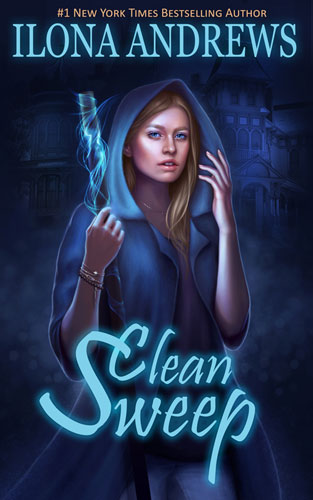
Using all the above tips, consider this from Ilona Andrews, Clean Sweep
Brutus was dead. His body lay under an oak on the Hendersons’ lawn. A small group of neighbors had gathered around his corpse, their faces sad and shocked.
Go here to read why the first two pages caught my eye. 


Note how the book opened with:

  • Action
  • A sprinkling of backstory
  • Nailed the MC’s appearance and name 
  • The weather and location 
  • And that Brutus “...hadn’t been what you would call a good dog...But no matter how annoying he’d been, he hadn’t deserved to die...”


An Exercise in Writing Professionally:

Remove all adjectives and adverbs from your first two pages.
Eliminate cliché and ho hum verbs and nouns. Substitute out of the ordinary and see how it tightens the story and creates interest.