Writing, promotion, tips, and opinion. Pour a cuppa your favorite poison and join in.

Thursday, November 12, 2015

World Building

Charity recently posted about world building, and her post inspired this one.  *Waves at Charity*  There have been times when I’ve come across a manuscript where the world building wasn’t quite what it needed to be.

I once received a submission that was actually a pretty interesting and compelling story.  However, the author needed to go back and flesh out the world a bit more.  The story was set in a future U.S. that had already been through a war.  Certain areas had been nuked.  The survivors had primarily banded together into two groups in two different regions.  Think of how the Mason-Dixon Line is supposed to sort of separate the North from the South, and you have a basic idea of what I mean by two different regions.  Well, one of these groups is composed entirely of females.  There are no males allowed, relationships can only occur between two women.  If a couple wants to have a child, they have to be registered and go to the clinic.  All embryos are female and no male DNA is used in their creation.

The other group is composed of male/female pairings, but it’s in the extreme, because the men are completely in charge.  Women do have jobs and things like that, but in the long run, they don’t have much say in matters.

As I mentioned before, the story itself was interesting, but the world had some issues with being believable.  For one thing, why weren’t there any groups of people who didn’t fall into either of the above categories?  Even though there were the female only communities, why weren’t there any similar communities strictly for men?  Why weren’t there any communities who had male/female pairings, but where women and men had equal rights?  Surely, the war didn’t twist everyone into believing the two extremes.  You find out later that there is a resistance, a group who believes that neither of the two societies is right, but why did they have to be a resistance?  Why weren’t they just a third society?  What made people believe that either of the two extremes was right in the first place?  What made people decide they had to split into those two distinct societies?  The entire U.S. wasn’t laid to waste during the war, so it’s not like there were very few inhabitable places left.  Why didn’t those who disagreed with the two extremes go out and form their own societies?  Why did they have to be underground as a resistance?  This author did receive a rejection, but I was very detailed in the issues I noted in the manuscript.  I explained that this world just wasn’t believable, because there wasn’t enough of a background to give the world plausibility.  While the author didn’t need to drown the readers in the backstory of it, they did need to give some plausible reasons for this world to form.


The questionnaire Charity shared during her post is a great place to start.  Sure, it’s detailed, and some of the questions wouldn’t apply to every story, but just reading through the list of questions shows authors the things they need to think about when creating their world.  The author can get away with not explaining some things by having their characters say, “That’s just the way it’s always been.”  However, that will only get you so far.  The author needs to think about whatever’s being questioned in their world and decide if something is insignificant enough to say, “That’s just the way it’s always been”, or if it’s important enough to explore why it’s always been that way.  And if it hasn’t always been the norm, to explore why it became that way.

You need to make your world work, and even if it’s an odd world where social conventions don’t make sense to us, it has to make sense within that world.  Readers have to be able to see the connection.  Even if it’s not something they could ever agree with, they need to be able to see how it was possible for it to become normal for your world and its characters.  The same is true if you have fantasy elements in the modern world.  How does the magic work?  What is the price for using magic?  If there's a prophecy, who made it and why?  Try to look at your world from an outside perspective and make sure things will make sense to your readers.  This is another thing betas are good for catching.

Wednesday, November 11, 2015

The Editor/Author Relationship

I know some of you have never worked with an editor, and some of you have, but I have a few things to say about the Editor/Author relationship.  Some editors might approach the process as a dictatorship, with the editor being the dictator.  I don’t personally know of any who are this way, unless it’s about certain things, but I’ll get into that in a minute.  My personal approach is something of a partnership.  When I’m editing your work, a little of my own heart and soul becomes entwined with your work.  I come to know and love (or hate if necessary) your characters almost as well and as much as you do.  At the same time, I often see things about your characters or story that you don’t, and I’ve helped authors more fully develop these things or get rid of them if need be.  When I’m editing, I might make suggestions regarding phrasing, but I always let my authors know that while they’re welcome to use my wording exactly, it is only there to serve as an example.  I’ve had authors who rephrased it exactly as I suggested, and I’ve had authors who rephrased it entirely differently, but which still corrected whatever issue I was pointing out.  An editor shouldn’t go in and rewrite your book.  That’s not what we’re for.  While you might say something the same way I would say it, you also might say it differently, so my words are only intended to help you find yours.  I’m not going to change something arbitrarily, or simply because I don’t understand what you mean.  If I’m concerned about it, I’ll leave a comment and ask you about it.

For example, Carol and I had a conversation regarding regionalisms.  There was something she said a certain way (sorry Carol, I can’t remember what this one was specifically) and I was wondering if she was missing a word in the phrasing.  Then I discovered it classified as a regionalism.  This spawned an entire conversation regarding regionalisms and how, when someone asks me if I want a pop, I always think, “No.  I don’t want you to pop me.  What did I do to you?”  Around here, it’s either a soda or a coke.

“Do you want a coke?”

“Sure.”

“What kind?”

“Mountain Dew.”

Once Carol explained the wording, and that it was how she and others around her always said it, it made sense.  I left it in the manuscript because I felt it added authenticity to the scene and “local flavor”.  I’ll even let you get away with using ain’t and git (as in “Git yerself outta here!”) in dialogue, because I’m from the South.  Ain’t is a word here.  However, don’t even think about using it in narration.  Not gonna happen.

For the most part, I work with authors.  If they disagree with me, I expect them to open a dialogue with me and tell me why they disagree.  Sometimes it’s simply misunderstanding the meaning, and an explanation clarifies it, so we’re good to go.  It stays as is.  Sometimes I understand, but it still has to go, so we have to reach a compromise.  And still sometimes it has to go, no matter what.  For example, Carol and I had to reach a compromise regarding “K” as a word.  She wanted Bert to say “K”.  Now, I completely understood her reasoning, (and yes, I have Carol’s permission to share this) but our publisher had a House Style Guideline that absolutely forbade the use of “K” as a word.  They would only allow okay or ’kay (only in dialogue).  For the record, a lot of other publishers have the same guideline.  Carol and I finally compromised on ’kay for Bert’s dialogue, but even if we were in his POV, it had to be okay in narration.

I try to be friendly with my authors and get to know them.  Some aren’t very reciprocal in that regard, but most are.  There are a few that have become friends.  I’ve only had one or two that you could probably describe as prickly, but we still worked together without any major issues.  With other authors, our relationship was strictly limited to edits.

My comments to an author are honest, and I try to use humor, because I know how hard it is to write and then have someone tell you this scene isn’t working, this character is coming across as a doormat, or another character you want readers to like is actually coming across as a huge jerk.  I’ll also tell you if I don’t like a character, even if it’s not yet clear whether or not I’m supposed to dislike them.  One character in a manuscript I’ve recently edited was coming across as a real annoyance.  I wanted to smack her.  Another character in the manuscript was accused of poisoning someone (no, they didn’t), and I told the author I wouldn’t be surprised if the annoying character had actually poisoned the person.  The author got a laugh out of that.

So, if you disagree with your editor about one point or another, open a dialogue.  Keep in mind that their hands might be tied by the publisher’s guidelines, because part of our job is making sure your manuscript adheres to them.  And that (along with grammar) is where most of us will become dictators.  Always remember that we, like you, want your manuscript to be the best it can possibly be, and we want to see it do well.

And for the record, even though Carol said I did, I’ve never told any of my authors they were falling down the stairs like a defunct slinky…at least, not in those exact words.  *grin*

Tuesday, November 10, 2015

Follow The Guidelines

Follow the Guidelines

I’m sure I’ve told you some things you already know, but maybe I’ve told you something you didn’t, or possibly shed additional light on those things you did.  But I know you’ve heard this.  You’ve probably heard it so many times you’re sick of it, but it’s just as true now as the first time you heard it.

Make sure you follow submission guidelines exactly.  Even if they tell you to send your manuscript in TNR 8, or Jokerman 16, their guidelines exist for a reason.  (And no, I don’t know of anyone who actually has these guidelines! *grin*)  Maybe their email platform does strange things to files, or maybe their software doesn’t play well with certain file types.  Maybe they just like the way the manuscript looks in Jokerman 16.  Or maybe they just want to see if you still remember the number one rule you learned in Kindergarten.

Follow the rules and/or directions.

Even if it seems arbitrary to you, there are usually reasons for the guidelines, so make sure you follow them.  And please don’t ask if you can do something different unless there is a very good reason for the deviation.  For example, if an editor tells you to send your full manuscript in an .rtf, .doc, or .docx file, don’t ask if you can send it as a .pdf.  I had this happen.  The author wanted to send a .pdf because they were concerned the other file types would ruin their formatting.  I explained that if it was accepted, it would have to be reformatted following our guidelines and template anyway, so a .pdf wasn’t necessary.  The author wasn’t obnoxious, but I got the distinct impression the author still wasn’t happy about it.  They agreed to send it, but they were still concerned about their formatting.  This might sound snarky, but I promise it’s not intended that way.  My only thought to this comment from the author was, “What kind of formatting are you using that it would be messed up by not having it in a .pdf file?”  Maybe they were just concerned with the way different programs communicate (or don’t) with each other.  That would be perfectly understandable, but our file had to be a .doc file when our content editors sent the files to the line editors.  I’m not sure what the author's concern was, or if they had tried something special in the .pdf format, something to make it look like a book, but I didn’t see anything wrong with the format when the manuscript was sent as the file type I requested.

So please, please follow the guidelines, no matter how normal or strange they seem.

Monday, November 9, 2015

Mistakes In Submissions Continued -- Research

This week should wrap up my Mistakes in Submissions topic.  Other than one or two posts that were inspired by the posts of other moderators, all of my posts were written out as a single post.  Due to the length, Carol suggested I break it up.  I've enjoyed covering this topic, and I hope you've enjoyed reading it!

At the very least, please do basic research on the elements of your story.  It will save both you and your editor time and possible migraines.  For example, one author I worked with had a scene pertaining to a heart transplant.  A doctor intended to pretend he was going to perform the transplant until the patient was unconscious, and then not do it.  (Don’t ask, it would take a long explanation, and I’m trying to stay away from as many specifics as I can for the sake of anonymity.)  Now, I’m not a transplant surgeon, nor do I play one on TV, but I knew this scene was not right at all.  What the doctor was doing to convince the patient a transplant was about to occur brought me to a halt.  I felt there was a major misconception in the scene, as well as elements that could have proven fatal for a real transplant patient.

 I stopped edits and spent quite some time doing online research, and I called an area hospital with a CCU (Cardiac Care Unit).  If someone there couldn’t help me, my next call was going to a hospital in Atlanta.  Thankfully, I happened to get someone who had assisted in many transplants.  I explained why I was calling and asked if he had a few minutes to spare for a couple of questions, or if there was a better time for me to call.  I’m certain he was a little bemused, but he was kind enough to answer my questions and I thanked him for his time.  Let me go ahead and say this.  When conducting research, it’s always better to try to be as unobtrusive as possible, so if you don’t know someone in the field you need to research, and if you can’t make an appointment for a phone interview, sending an email or letter would probably be best.  I don’t recommend cold-calling like I did, but I was working against a deadline.  Cold-calling could bring you together with someone who’s having a really bad day, or who’s extremely busy when you call.  Neither bodes well for your research.

After the combination of online research and my phone call for verification, I had some very definitive answers for my concerns and I was able to help the author correct the scene.  And yes, I was correct about the things that troubled me the most.

“But wait!” you say.  “If the readers knew the doctor wasn’t going to perform the transplant, why would you even bother with the research?”

That’s a good question with a simple answer.  Remember the patient thought the doctor was going to perform the operation?  Well, the patient was also smart enough that the same things I was concerned about would have alerted them to the fact the doctor didn’t intend to do it at all.  The scene had to look good and be realistic for the patient.  Since the readers would know that this had to look real for the patient, they would be looking at how well the doctor was covering his behind.  You don’t want a reader who just happens to be a member of a transplant team to send you a letter saying, “The doctor would have never done that.  You need to do your research next time!”

Research glitches can happen in many areas, but I often see it in medical, law enforcement, military, forensics, and legal aspects of a manuscript.  I've seen:

Medals pinned on the wrong side of a uniform.

Period pieces where words that didn't exist for a hundred years or more after the story's time period were used.

Legal jargon used improperly.

Wines served in ways they would never be served in a fine restaurant.

Complications from medical procedures and injuries that made no sense whatsoever, or that were completely impossible.

Characters accessing files they shouldn't be able to access, from places they logically shouldn't be able to access them, and which would have gotten an innocent family member fired from their job, given them a hefty fine, and possibly put them in jail.

Do your research.  Don’t give your reader the details unless you absolutely have to because it’s integral to the story.  While it’s possible as much as ninety-nine percent of what you learn will never crawl out of your head or your notes, your scene must still be written with that research in mind.  It helps lend your scene the credibility and accuracy it needs to breathe for the readers.  I'm a stickler for research.  I could go on with other examples where it made the scene, and instances where scenes had to be rewritten because not enough preliminary research was done, but this post is probably too long already.  Just remember, research is important, whether it’s a minor aspect or a major one.

Saturday, November 7, 2015

Beta Readers and How Does it all Pay off in the End?

I had two excellent comments the other day and they're sparking a full blog post.

The first was by Han Hills and he asked about tips on finding the right beta readers and the etiquette involved. He also wondered how to find those people with more expertise in structure and narrative flow and even those interested in non-fiction.

Oddly enough, the best place to find beta readers is online or in a writing group. I belong to a group of writers with over 20,000 members. The group is big and diverse. We come from all over the world. That gives a person looking for beta readers a huge pool to pull from. When someone asks for beta readers in the group, they give a synopsis of their book and asks if anyone would be interested in beta reading. Depending on the genre, the person could be swamped with responses. So right up front, be super honest about what your book is about. If it's a novel, then let them know and what genre it is. Some people won't touch certain genres and it's better to weed them out early. If it's non-fiction, definitely say that. I'm a person who cannot read non-fiction to save my life. I would never offer to beta read in that situation.

Several people say it's handy to have a form detailing what they expect from their beta readers. On that form, it could ask specific questions of things you're looking for. Things like structure and narrative flow. ;-) If you want someone to help you hunt for typos and grammar errors, then include those. If you just want to know if someone liked the story, then say that. Also, include if there's a deadline for when you need the feedback. Hopefully, if someone knows they can't meet the deadline, they'll back out then instead of leave you hanging. Another thing is, the more the merrier. Always expect some people to flake out. As you go through the final responses, you'll start building up your own directory of people to ask for help again in the future. You'll also know who to avoid.

Patsy hopes I'm right that all of the steps I outlined previously will pay off in the long run.

I can actually tell you a story about this, Patsy. Back in January, a young man in the group I'm in came in and asked us what we thought of his new cover. I'd never noticed him before. I never saw his book go through on promo days, but I was immediately drawn to the cover art. A lot of us asked him what the book was about and I went out and bought it. I saw the old cover and I can tell you, I would NOT have been interested based off that and his blurb.

In reading the book, I noticed a ton of errors. A lot of typos and odd uses of punctuation, but his 'rough draft' caught my attention and sparked my imagination. I will admit I gave it a rating it did not deserve. But I loved the story line so much, I was willing to overlook the errors. Most people aren't that lucky in hitting just the right tone with a story. And he has the reviews to prove that people were quite annoyed with the errors.

Since that time, I have followed that book through each of its versions. It went through a good editor and came back tighter and cleaner. It went through several beta reads and small things were caught and cleaned up. I was the proofreader on that book and helped with the final polish to get it as shiny as possible.

That book has jumped from barely being noticed to having over 100 reviews and is holding steady at a 4.8 rating on Amazon. It was also put into print at the beginning of this week. Until now, it had only lived as an e-book. The book was originally published 3 years ago. Since it underwent its transformation, it's climbing the ranks and starting to sell better. The reviews keep coming in. He is now preparing the second book in the series to come out early next year. Only this time, it's not being published until it has gone through the process.

And that book is Grave Beginnings by R.R. Virdi. We featured it on this blog twice... On accident. ;-) But I will admit it was fascinating to watch as it underwent its transformation and to see what each step of the process did for sales and reviews. If there is an audience for your book, then having it in the best shape possible is definitely the way to go. Don't jump the gun. You don't want to wait three years for your book to stumble its way to being "found" and recognized for the gem it should have been at the beginning.

Sevara: Dawn of Hope by Damian Wampler

Today, I'm bringing you two posts. ;-) I got sidetracked yesterday (oops) because I was working hard on creating my YouTube channel. So, my reviews will not only be on my website; they will also appear on YouTube! I'm excited by the new direction A Drop of Ink Reviews is heading and being able to use today's technology to expand the reach of independent authors and potentially reach more people than ever before.

Now, on to a review that won't even appear on my website until tomorrow.


When fifteen-year-old Sevara refuses to marry, she's kicked out of her orphanage and left on the streets of Plexus with nothing. She doesn't last long on the outside. Luckily, someone has been watching her.

A shape-shifting immortal gives Sevara a second chance at life, and a powerful set of gifts. But when Sevara begins a doomed love affair with the man she could have married, she must choose between protecting the city and saving the only man she's ever loved.
(taken from Goodreads)

My Opinion:

Sevara is a headstrong young woman. That is not something this society regards as a good trait. Females are not something someone wants. When one is born, the girl child is taken to one of the local orphanages and placed there. There are only two ways out. To be bought by a male looking to essentially raise his wife to be a model servant and bedmate or to age out. Hidden until her 14th birthday, Sevara eventually ages out. However, her personal sense of morality is a hindrance and sparks something no one in power ever wants to see. A possible change in the way things are.

In a country torn by war, Sevara aims to do what is right, no matter the cost.

I have always thought I had a good imagination, but Damian Wampler pushed it to the limits. I’ll admit there are a few things he put into his book that I still can’t picture. The main thing is the transportation system. I honestly cannot picture how such a thing would work, but Wampler could. In the end, I suppose that’s all that matters.

Sevara: Dawn of Hope is split into three books. Every time one ended, I’d turn the page on my e-reader in the hopes the next section was there. I was kept completely engaged in the story until the very end. There were a few parts where I was like, “You have got to be kidding me,” but they were few and far between. It was his world to put together as he saw fit and that’s all that matters.

I’d definitely put this in the steampunk genre, but the entire series shows promise. I’m not sure where he’s going next, but it could be fun to follow along and find out. Well, as soon as I can free up more reading time and catch up on my TBR list that is. However, I did finish reading this book a good week ago and it still lingers in my mind. That is definitely a sign of a well-told story.

Wednesday, November 4, 2015

4 Easy Tips to take Your Book from Mediocre to Stunning


I read an article this morning on how a mother goes about telling her 15-year-old daughter she couldn’t write. The premise of this article boiled down to, “You don’t!” Instead, you support her and encourage her to keep working on what she obviously loves. With practice, we all get better.

However, as a book reviewer, I don’t have that luxury. As I do not have a book out there for people to read, I don’t know what it’s like to take and hold my baby in my hands and ask a total stranger to read it and give me their opinion. But I DO remember what it was like to show total strangers my writing for the first time. Let’s just say I was terrified.

Now, I’m the total stranger. Authors come to me asking me for my opinion on their work. I promise to tell people my honest opinion on their work and I contact each and every one of them when I’m done. Nothing is more painful for me than to go back to an author and tell them their work needed well… more work. It is my least favorite part of my job. I much prefer to go yelling from the rooftops that the book I just read was terrific and everyone should read it. 

We have now entered November. During this month, probably more books are created than at any other time of the year. If I had been able to keep up with my reading list, I have no doubt I’d have people climbing all over me in December asking me to read their book. Those weird little novellas penned during what is known as NaNoWriMo. I’ll admit I’m glad at this point my doors are currently shut. Now I have an inkling of how publishers feel every time November rolls around. Do I hate NaNoWriMo? Absolutely not. As a matter of fact, I’m participating in it. But I know a few things from being a reviewer and I want to share them with you.

When you think you’re ready to self-publish, consider these 4 simple tips: 

1) Make your cover beautiful. In the world of self-publishing, the marketplace is flooded. We DO judge a book by its cover. There are many talented cover artists out there. Hire someone. If you’re not awesome at graphic design, please don’t try it yourself. It will show.

2) Make sure you EDIT the book when you are done. Nothing is more painful than reading a book that obviously would have benefited from such a service. Does it cost money? Yes. But without it, your book could potentially fail.

3) Get beta readers! These are marvelous friends who love to read and are willing to point out the problems to you. If you have a friend who has issues with punctuation and grammar and goes nuts correcting the errors, for goodness sakes, hang on to them! They’re worth their weight in gold.

4) Get your book proofread! I have returned a lot of books to authors over this minor detail. When I take stars away for every 10 typos in a book, and I end up with a negative number, I have to wonder if you even read your own book. You may very well need to bring in someone who has never seen your book before in order to catch as many as possible. There are professionals out there who do this, but sometimes there’s that good friend who will help.

These are simple steps that easily take a book from mediocre and can polish it to a high shine. A lot of writers are unwilling to go through this process because it takes time. You want to see your book OUT THERE! But trust me. Going through these four little steps pays off in the long run. With everyone doing their part, we can show the world that ‘self-publish’ is not a bad word. And then maybe my “I’m sorry” letters can be purely based on the fact the story line was not my cup of tea. I’d like that.

Friday, October 30, 2015

Top 5 Reasons You Should Attend a Writers Conference

As if you need a reason!

Here are my top 5 anyway...

5. Free books for door prizes.

4. The classes WILL make you a better writer.

3. You can find critique partners easily in a large group of writers.

2. Agent pitch sessions could catapult you into your writing dreams.

1. You get to talk to other people about your imaginary friends without being judged. In fact, you might even gain admirers. My daughter worded it this way, "You get to be with all the other weirdos."

Have you been to a conference? What was your favorite part? What would you add to the list?


Thursday, October 29, 2015

Marketing 101: Finding Reviewers

Before my first novel was released, I spent hours upon hours of web searches for book reviewers. I found a great site that listed hundreds of them along with a note detailing what kind of books that particular reviewer liked. As I worked through the list, I'd find old blogs that hadn't been updated in months or even years. Others were current, but so overloaded with requests that they had stopped accepting requests. Every once in a while I'd find a reviewer, send an email and get a positive reply.

Why do we go through so much trouble?

Because review numbers count. People are comforted to see that lots of other people have read a book. It makes them feel like they have a better chance of enjoying a story if hundreds of other people already enjoyed it. In a way this is silly. Reading is so subjective that I could try a book a million people loved and still not be able to get past the second chapter. (Slight exaggeration, but it has happened.) However, as authors we have to accept this truth and put in those grueling hours.

I only knew one way to approach that task before the conference--combing through long lists hoping to find a few honest reviewers interested and with time to review my book. However, I've got another way to find them now, and a new perspective.

First, the perspective.

I book review bloggers were the only people I could approach to review my book. However, it was pointed out that approaching focus groups outside reading groups can open up an whole new world of reviewers.

For instance, let's say you wrote a suspense novel where the MC runs a bakery. You can contact bakers to read your book and give a review. Maybe your MC loves horses. You can search for online groups who love horses and see if they'd be interested in reading your book. And so on.

Now, a new way to find readers who review.

1. Pick/search for a book on Amazon comparable to your book
2. Click on the link for their reviews
3. Browse the reviews for ones that you like how they were written and click on the reviewers name
4. Look for the email link (Note: not all reviewers have an email link, but don't give up, keep looking) and send them a query just like you would any reviewer

Good luck and happy hunting!

Wednesday, October 28, 2015

Indie 411: Finding Ways to Make More

This class was pretty amazing. It flew by though as I tried to scribble notes on what I needed to do in order to become a successful Indie author. The problem now is finding the time to actually do these things.

The main take-away for the class was to get my name and books out there anywhere and everywhere I could. There are many ways to do this ranging from free to however much you care to pay. Since my hubby isn't too keen on me spending family money on my marketing, I'm going to focus on the cheaper range of things today.

Post your books on more than just Amazon.

Yeah, I know this should be a no brainer, but let's face it, Amazon is so easy. A couple months ago I tried to put FADE INTO ME on Smashwords. After several frustrating tries I called it quits. Nothing should be that difficult! And don't get me started about trying to be listed on Barnes & Noble's online store. Their paperwork didn't make any sense to me and it sounded like I needed to create my own imprint to do it. (I could totally be wrong, but who has the time to figure this out? I need to be writing!) One place I never considered listing my books was iTunes.

The instructor suggested we check out Jutoh.com for quick and easy ebook formats. This is a one time purchase that promises to never be out of date as it evolves along with devices and formats.

Have your book translated into other languages.

Check out Babble Cube for this. The great thing about this site is there is no out of pocket expense for the author. Sign up, get a translator, sell your book and share royalties. Babble Cube keeps 15% and the author translator royalties change over the life of the sales. Royalties favor the translator up to $2000 and then they start moving toward the author. You can see the break down on this page.

Put your book out there for audio listeners.

I always wondered how you made this happen. It's way easier than I imagined. I went to ACX.com (which is part of Amazon) and used my existing author account to claim my self-published book. 30 minutes later I had submitted my book for auditions. None of this cost me anything since I chose to share royalties. ACX keeps 60% (no surprise) and then I'll split the last 40% with whoever records my book for me. The best part is I will get to listen to the auditions and choose my narrator.

There are options here as well. If I had a good microphone, and could guarantee my dogs wouldn't bark while recording, I could record my own book. Then I'd keep the entire 40% of royalties. Here's the thing, recording a 60K book will take forever with all the editing and splicing together to make it an enjoyable read. I'd rather share royalties!

Here's why you should give audio books a try.

  • Extend your brand 
  • Give extra life to the story you’ve written 
  • Provide more good stuff for your fans 
  • Add new fans who might never read a book
What things are you doing to spread your reach?

Monday, October 26, 2015

What Can We Learn From Romance Writers?

No one would argue that the romance genre is hugely successful as a market. I don't consider myself a romance writer, however all of my books have a thread of romance in them. Maybe you are a romance writer, but even if you're not, there's much to learn from the genre that will improve our own stories. Whether it be science fiction, fantasy, paranormal, horror, contemporary, or any other genre out there.

What Romance Writers Understand


Emotion

People read romance to feel the emotion of first love all over again. They love the anticipation, the disappointment and subsequent journey to repair and reunite the lovers, and finally the pay off at the end.

The emotions in our novels might be slightly different, but we all need to ensure our stories are cram-packed with them. If someone picks up a horror tale, they expect to be scared so bad they can't sleep that night without the bathroom light on. Those reading suspense in any form want to be kept guessing while sitting on the edge of their seat in concern for the characters.

Getting the picture?

So how do we ramp up the emotion?

Conflict

We talk about this one all the time on UB, but has it sunk in? Conflict doesn't have to be high speed chases, kidnappers, and explosions in order to keep readers interested. Here's a quick refresher course on the two types of conflict.

External--

Something outside of the character (another person, the environment, etc) that forces them to take action or change. This conflict MUST MATTER, not be something stupid (like Sharknado, just saying) that is simply a tool to push your characters somewhere. Make it realistic.

The external conflict should make the character face what they fear the most. 

The introduction of the external conflict often brings the internal conflict out into the open. This conflict is solved by external means--they cut the right wire to shut off the bomb, the cops/FBI/CIA/detective catches the bad guy, and so on.

Internal--

In many genres, including romance, this is the most important type of conflict. Internal conflict is all about what your character brings to the story intellectually and/or emotionally. It comes from their experiences, beliefs, personalities, and prejudices.

This type of conflict is solved by character growth. 

Identity vs. Essence

This is perhaps the most important concept of them all. It follows perfectly that last statement referring to character growth. Here's the best way to start talking about identity vs essence.
 

Just like ogres, all of our characters need to have layers. We start with Identity, or how the character sees themselves or how they think the world sees them. As the story progresses, conflict peels away the layers of identity until we are left with Essence--the character's true self. Reaching essence is reaching their potential.

I don't know why, but I'd never considered character arcs quite in that way before. The presenter didn't talk about Shrek, but when she mentioned peeling away the layers to get to the essence that's exactly what I thought of.

QUESTION For You:
Share one of your favorite character with us and tell briefly how their identity from chapter one changed to essence by the end of the book or series.

Your Very Own Writer's Conference

Two weeks ago, I had the great pleasure of attending one of my favorite writer's conferences. This was my third year in a row attending the LDStorymakers Conference in Kansas City. It's always a bit like coming home, if you know what I mean.

Anyway, I'd love to share what I learned with you. This year I attended more Indie Author classes than craft, but there were a few craft insights that finally took root in my head. Here's what this week will look like:

Class on craft--Elements of Swoon-worthy Romance. I learned several things about characterization from this class that don't have anything to do with romance. That's right! There is something we can all use to help us create believable character arcs.

Indie 411: A hodge podge of helpful sites and cool information about audio books.

Marketing 101: Finding Reviewers. I've done okay with this in the past, and I'll be honest, I thought I knew what I was doing. However, I was only scratching the surface of possibilities. There are a few simple tricks to finding reviewers that I had no clue about.

And finally, I'll share my Top 5 Reasons You Should Attend a Writer's Conference.

Friday, October 23, 2015

Long Distance Travel


Most speculative fiction begins with a question. What if? This week I've been posing a couple for you.

What if the only way we humans can travel to distant stars/planets is to lose our physical forms?

Thursday, October 22, 2015

After What?


This week I've been posing what if questions. Just random thoughts that may take your story someplace. Or not.

What if this is the "afterlife"?

Wednesday, October 21, 2015

Lack of Imagination

(c) Scott McLeod
So, um, yeah. It's been that kind of week. A week to contemplate the what ifs of it all...

What if imagination was something that people feared? What if stories were forbidden? What sort of a people would we be?

Tuesday, October 20, 2015

Vengeance is Mine


What if? It's a question that can take your novel in a whole different direction. It's a question that can begin a whole new story...

What if you* were wronged so badly that you contemplated revenge on the one who wronged you*? How far would you* be willing to go?

*You'd never really resort to revenge, would you? So, by "you" I mean any character in your current WIP.

Friday, October 16, 2015

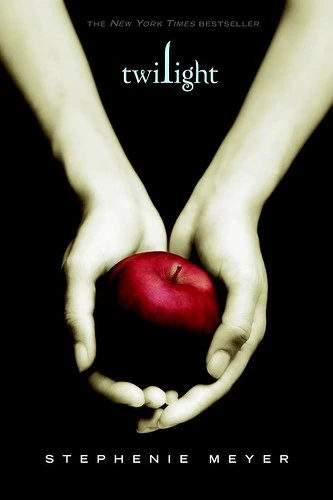
The Beginning of the End, the Twilight Adaptation

This is the saddest, most heart-wrenching opinion/review I have ever given.


Part I –
Seven years ago, I saw a movie trailer that enticed me to buy the book. The name was Twilight and my life changed dramatically.

If Twilight isn’t your cup of tea, if you scratch your head and wonder WTH anybody sees in it, I have one thing to say:


Pray God that you find something in your life that has as big an impact.


Twilight made me want to be a better person. But it also opened a door and exposed the realm of Writer, a place that I’d never dreamed of going.

Having set the stage...

Part II –

Stephen Meyer, author of The Twilight Saga, celebrated the tenth anniversary of the series by releasing an adaptation of Twilight called Life and Death.


I have no words to express my disappointment in this—her evident response to critics of Twilight. I never saw Bella as anything but a strong female figure. Edward was a seventeen-year-old boy not a creepy old man of ninety as some would say. I could go on and counter every criticism with my opinions. Especially regarding the strange vitriol people are comfortable throwing at the series. But I’ll stop there because evidently Ms Meyer let the naysayers into her head. 

She responded by re-writing Twilight and gender swapping the lead characters. As in, female vampire named Edythe and male human, Beau.

Not a bad idea...IF she’d created a completely new storyline with different character traits and idiosyncrasies. But she didn’t. She simply exchanged pronouns and names and left the meat of the conversations and scenes the same. I mean word for word.

Gaahhh.

What a treat it would have been if she’d created a new story. Or finished Midnight Sun, Edward’s POV. How magnificent that would have been. But she didn’t. 

I compare it to discovering the previous owners of our house painted over the nests of mud daubers ( a kind of wasp that make their nest from mud) rather than taking the time to start out with a fresh, clean surface.

To be fair, not every scene is the same and some folks might enjoy it. Maybe someday I will try it again. But not now.


Twilight made me want to be a better person. Being a writer was a bonus. But for me, Life and Death has warped my view of Twilight like no critic could do. 
And the loss I feel is profound.