Writing, promotion, tips, and opinion. Pour a cuppa your favorite poison and join in.

Showing posts with label a to z challenge 2016. Show all posts

Saturday, April 30, 2016

Zealot - A to Z Challenge


At the heart of much speculative fiction (and fiction in general) is a question. What if? Occasionally, I like to throw one out there and see what you make of it. Do with it as you please. If a for-instance is not specified, feel free to interpret that instance as you wish. And if you find this becomes a novel-length answer, I'd appreciate a thank you in the acknowledgements ;)

What if the zealot you've been debating (on social media, at work, in the coffee shop line, in your family...) suddenly said something you completely agree with? On a topic you both vehemently disagree about? (Did they suddenly see sense? Did you just go crazy?)

Today's A to Z Challenge post brought to you by the letter...

Friday, April 29, 2016

Y - A to Z Challenge

Blogging from A to Z Challenge 2016


Theme for the Challenge:

Guess the movie!


“Put...the candle...back”


This movie is one of the goofiest, most original shows ever. Released in 1974, it starred Gene Wilder, Madeline Kahn, weird Marty Feldman, and Teri Garr. Mel Brooks and Wilder made an excellent team as co-writers.

It joins Galaxy Quest as one of the most quotable movies in my blogosphere.
Watch the bloopers. Absolute chaos reigned with cast and crew laughing too hard to finish the scenes.


Highlight below for the answer.


Young Frankenstein. 

Thursday, April 28, 2016

X - Unusual Words - A to Z Challenge


Chrys’s Theme: Unusual Words

I love to fit unusual words into my writing if I can. I also love to discover new-to-me words. They are so much fun. I enjoy looking at them, saying them, and writing them. Yes, I have a real love for words. I bet many of you do too. So I am sharing odd words for each of my letters.

Today is X!

Xanthic – yellowish
Xanthine – a crystalline compound found in blood, urine, muscle tissue and some plants
Xanthus – having yellowish, brown or red hair
Xenia – the appearance in seed, fruit or maternal tissues of  characteristics belonging to the fertilizing plant
Xenial – concerning hospitality toward guests
Xenon -  an inert gaseous element
Xenophobia – fear or dislike of strangers or foreigners
Xeric – dry
Xingu- a river in Brazil
Xiphoid – sword-shaped
Xylograph – a wood engraving
Xylography – the art of engraving in wood
Xylophone – a percussion instrument
Xylotomus – able to bore into or cut wood
Xyster – surgeon’s instrument for scraping bones

SEE ALSO:
Unusual Words - P
Unusual Words - H


Author of Hurricane Crimes, 30 Seconds, Ghost of Death, and Witch of Death. Blogger. Reader. Auntie. Vegetarian. Cat Lover.

Wednesday, April 27, 2016

W is for We Were Liars

Hello, everyone! Today for the A to Z Challenge, we have the letter "W."


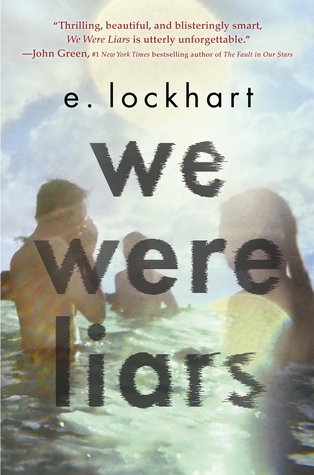
My theme for my small contribution to A to Z has been books I've either read or want to read, and the book I'll share with you today is one I've already read and loved. We Were Liars by E. Lockhart was one of those books that kept me thinking long after I turned the last page, and is now one of my favorite books. If you love YA contemporary books with unreliable narrators, then I highly recommend this one!


Book Description (Taken from Amazon):


A beautiful and distinguished family.
A private island.
A brilliant, damaged girl; a passionate, political boy.
A group of four friends—the Liars—whose friendship turns destructive.
A revolution. An accident. A secret.
Lies upon lies.
True love.
The truth.

We Were Liars is a modern, sophisticated suspense novel from New York Times bestselling author, National Book Award finalist, and Printz Award honoree E. Lockhart.
Read it.
And if anyone asks you how it ends, just LIE.


Happy Reading! 

Saturday, April 23, 2016

T is for Tanka


Now, we’re talking! If you don’t know already, I love surfing the Hallyu wave. But that'd never happened if I hadn’t been indoctrinated to the Asian culture and media as a young child.
I was first bit by the bug when I watched my first anime one Saturday afternoon. To those who don’t know, anime is a shortened term for Japanese animation.


So can you imagine my excitement that I got the letter “T”!? Well, you’re about to find out why.


Because...


Tanka is a Japanese poetic form. It originated in the 7th century thus making it one of the oldest Japanese forms. The tanka is 31 syllables long, consists of five lines and doesn’t rhyme. And unlike the haiku, it is the more expressive of the two with its use of metaphors and personification. For this reason the tanka resembles a sonnet, a love poem.  Also, the tanka were often written by lovers to give their thanks for a memorable night. ;-D


The beginning three lines, upper lines, of the tanka starts off like a haiku. An image and or setting  is introduced. And immediately followed by a shift or expansion of the subject in the last two, lower lines.


The tanka, like the limerick, has a syllable count for each line: 5/7/5/7/7. Meaning that lines one and three are five syllables long. While lines two, four and five are seven syllables long.
Here’s an example of a tanka poem by poet Tada Chimako:

Person of the Playful Star: Tanka [I listen to songs]

I listen to songs
of someone handsome
at the apex of night
the Milky Way overflows
the stars boil over and fall
© 2010


I’m more into writing the senryu, another Japanese poetic form. I even pair them up with images and post them to Instagram and Twitter but here’s my attempt at a tanka poem:


April 21


Their petals fell
like tears for a fallen icon
before vanishing.
Another star lost its light
to shine in the skies above.
© Lidy Wilks, April 22, 2016

Want to attempt your own tanka poem and share it in the comments? Have a favorite tanka poem you'd like to share? Are you familiar with the haiku and other Japanese poetic forms like the senryu or waka?

Friday, April 22, 2016

#AtoZchallenge S is for Scene and Setting

I owe everyone an apology today. The plan had been to talk about the importance of setting and scenes in our writing. However, I'm currently typing this on my phone so it will be super short and contain questions for you. 

Setting--
What books have used setting to draw you in, or to highlight some aspect of the story? Please share specific examples. 

Scene--
We've all heard that a scene it should contain a beginning middle and an end. The  most important thing is that it must have a purpose. If it doesn't have a purpose then you don't need it. 
Share an author who you think does this really well. 

Check out the other participants HERE.

Thursday, April 21, 2016

Rewind - A to Z Challenge


At the heart of much speculative fiction (and fiction in general) is a question. What if? Occasionally, I like to throw one out there and see what you make of it. Do with it as you please. If a for-instance is not specified, feel free to interpret that instance as you wish. And if you find this becomes a novel-length answer, I'd appreciate a thank you in the acknowledgements ;)

What if you could go back in time and relive one hour of your life? Any hour, but only the one. (And, for the sake of argument, any changes to the timeline would affect your current present.)

Today's A to Z Challenge post brought to you by the letter...

Wednesday, April 20, 2016

Q - A to Z Challenge

Blogging from A to Z Challenge 2016


Theme for the Challenge:


Guess the movie!


"And so, Dr. Beckett finds himself leaping from life to life, striving to put right what once went wrong and hoping each time that his next leap will be the leap home."

For my Q today, it’s a TV show. 

First broadcast in 1989, this show had good graphics for the time and Dean Stockwell made a fine “Bob”—a character who explains and ties up the loose ends. 

Scott Bakula went onto other ventures including a star ship captain.

A bit dated by today’s standards, it still had a five year run. The one episode I remember is when he leaps into the Kennedy assassination, very hard to watch, emotionally.

Highlight below for the answer:

Quantum Leap

Tuesday, April 19, 2016

P - Unusual Words - A to Z Challenge


Chrys’s Theme: Unusual Words

I love to fit unusual words into my writing if I can. I also love to discover new-to-me words. They are so much fun. I enjoy looking at them, saying them, and writing them. Yes, I have a real love for words. I bet many of you do too. So I am sharing 20 odd words for each of my letters.

Today is P!

Pacificator – peacemaker
Pallescent – pallor
Palsy-walsy – weakling
Papule – pimple
Parapraxis – slip of the tongue, forgetfulness, mistake
Parry – dodge, prevent
Parsimonious - stingy
Peerless – unrivaled, alone
Pell-mell – confusion
Penitent – remorseful
Perfidious – faithless
Pith – essence
Pneuma - soul
Poky – dull
Poltroon – coward
Prate – chatter
Puckish – playful
Pule- whimper
Pussyfoot – sneak
Pygmy - tiny


I’ll be back for X!


Author of Hurricane Crimes, 30 Seconds, Ghost of Death, and Witch of Death. Blogger. Reader. Auntie. Vegetarian. Cat Lover.

Monday, April 18, 2016

O is for (The) Other Boleyn Girl

The book I've chosen for the letter O is one I really want to read. I found a copy of The Other Boleyn Girl at a consignment store a couple of years ago, and while I added it to the gigantic basket of TBR books I keep in my closet, I still haven't read it yet. But I hope to soon! If anyone has read it, let me know what you thought! :)


Book Synopsis (Taken from Amazon):

When Mary Boleyn comes to court as an innocent girl of fourteen, she catches the eye of the handsome and charming Henry VIII. Dazzled by the king, Mary falls in love with both her golden prince and her growing role as unofficial queen. However, she soon realizes just how much she is a pawn in her family’s ambitious plots as the king’s interest begins to wane, and soon she is forced to step aside for her best friend and rival: her sister, Anne. With her own destiny suddenly unknown, Mary realizes that she must defy her family and take fate into her own hands.

With more than one million copies in print and adapted for the big screen, The Other Boleyn Girl is a riveting historical drama. It brings to light a woman of extraordinary determination and desire who lived at the heart of the most exciting and glamorous court in Europe, and survived a treacherous political landscape by following her heart.

Friday, April 15, 2016

M is for Magic Without Boundaries or Consequences


Tropes…love ’em or hate ’em, some seem to be here to stay.  Whether they should or not is actually up to the individual reader.  I think the main problem with tropes is that an author reads a story, they’re so drawn into the world of those characters, and they love those characters so much, they decide they want to write a story like that.  Okay, that’s great.  Imitation is often referred to as the highest form of flattery.  However, there’s a problem.  When someone decides to write a story like that, they often have a tendency to rewrite THAT particular story.  Oh, not in the manner of plagiarism—though that’s happened—but they’ve taken the bare bones of the inspiring story and just dressed it up in different clothing.  There’s not a whole lot out there that hasn’t been done before, and most stories have commonalities as their core.  Because of this, you have a tendency to see certain tropes that pop up quite often in specific genres.  Some of those tropes have such a universal theme you’ll find them in other genres as well.  The secret is, if you do decide to go with a tried and true trope that a lot of readers still love, then you need to find a way to put a new spin on it.  To teach an old dog new tricks.

M is for…
Magic Without Boundaries or Consequences


While this is primarily found in pure fantasy novels, you’ll come across it in other genres where the story has fantasy elements.  You’ve probably come across it in one novel or another, and you might even be able to name that novel right off the top of your head.  Simply put, Magic Without Boundaries or Consequences occurs when the magic-wielders can use obscene amounts of magic without ever getting tired or suffering any ill side effects.  It also occurs when you see magic-wielders who are supremely powerful and have a spell that will take care of anything and everything.

There are a couple of reasons this is problematic.  First, if the magic-wielders are so powerful, why is there even a struggle in the manuscript?  If the good guys have such a powerful magician/witch/wizard/sorcerer, why can’t they just destroy or capture the bad guy before he gets out of hand?  How is there even any conflict?  If it’s the bad guy who is so powerful, again, how is there a conflict?  Why doesn’t he just take over the world?  Why don’t either of these characters basically take on a god-like persona?

The exception to this would be when you’re dealing with characters who are gods of some sort.  Their lack of involvement is usually explained with the age-old reason that they don’t involve themselves in the affairs of mortals, unless it directly impacts the gods.  Fair enough.  In those cases, the gods may become involved, but what they can or can’t do is usually limited, and there are reasons for that.  For example, one book series I know of has gods who become involved in the affairs of mortals because it has direct bearing on the gods.  Another god of their pantheon is the one causing all the trouble.  However, the other gods are reluctant to get involved at first, because they have their own very specific laws about how they must deal with each other.  Much to the annoyance of the humans involved.  Due to circumstances like this, the display of a god’s all-powerful magic either isn’t seen at all, or it’s saved for something very specific.

Back to our normal magic-wielders.  You’ve seen them.  They’re the ones who continually blast through devastatingly powerful spells, and they just keep right on doing it.  They don’t need any time to rest and recharge, because they don’t get tired or pass out, or suffer any other ill effects.  Now, this can depend on the magic of your world, so you have to have a pretty concrete idea of how it works, and you should communicate that to your readers without boring them with it.  Does the magic come from within the mage?  Does the mage have the capability of drawing the power directly from the world?  Does the magic depend entirely on spell components?  Knowing how the magic in your world works is important, because if you know how it works, you can set limits on the magic and create consequences that are believable.  For example, most magic is portrayed as coming from power within the mage.  Since this type of magic is essentially energy, a mage’s magical ability should be limited by their physical energy.  They should get tired and need rest after using a lot of spells, or even after one or two very powerful spells.  They should black out or suffer another major side effect after overexertion, after attempting a powerful spell when they haven’t had enough time to recharge, or after attempting a spell that is too advanced for them.

Though they’re from movies, I can think of two good examples where consequences for using magic were employed.  The first is from The Covenant.  In this movie, there are four young men who are warlocks and are referred to as The Sons of Ipswich.  They’re descended from four of five magical families.  While they have some power earlier, they don’t come into their true power until they turn eighteen.  The drawback?  Using their power is addictive, and their power is tied to their life force.  The more they use it, they more they WANT to use it.  When they use their power, it takes away from their life force.  At one point in the movie, we finally see the main character’s father.  Even though the man hasn’t really even hit middle-age chronologically, physically, he looks like he’s in his eighties…and time hasn’t been kind.  Not only is the magic seductive, making the user addicted if they aren’t careful, it ages the user dramatically.

The other is from Mirror, Mirror.  While it isn’t quite as complicated or involved as The Covenant, it does use the premise that magic ages the user.


What about if your characters are able to simply draw the energy from their world?  Should there be any consequences for that?  This one’s a little trickier, because I can see both sides of the coin in this situation.  First, you could say that because the character is merely a conduit, it shouldn’t require any energy from them, so they shouldn't suffer any kind of drain.  I can see that argument, but I can also see why some people would say it would take the user’s energy to tame the wild energy of the world and to use it to achieve the effect they want.  Honestly, I can see this particular situation going either way.  If an author chooses to use this in their world, I think they should still flesh out how the magic works and find a way to explain either situation believably.

What if your characters only use magic that comes from spell components?  With this one, in my personal opinion, the mage is still going to use energy to achieve the desired result.  Now, you may set your world up so all the mage has to do is learn the words to the spell, follow the directions, and use the proper components to explain why there isn’t any physical drain.  Of course, in a world like this, you’d have to plan the magic very carefully.  Unless you could find a plausible explanation, there wouldn’t be a lot of elemental manipulation, or at least not in the form of a character being able to conjure fireballs out of thin air, or being able to shoot lightning bolts from their fingertips.  Elemental magic would require careful considerations as to how you could make it work.  And what would be special about mages?  In a world like this, anyone could be a mage.  If you don’t want to create a society where everyone’s a mage, in a world like this, you’d have to be able to explain why everyone can’t be a mage.  Maybe only people from certain families are allowed to be mages.  Maybe there are schools that children are sent to, and unless you completed training through those schools, it was illegal for you to even own magical implements.  Perhaps the laws are so strict that a person who is untrained and found to merely be in possession of a magical implement is imprisoned for an extremely long time, or even put to death.  If the children attend schools to learn how to be mages, how does that work?  Do parents apply the moment their child is born and hope they get in?  Do all children attend a basic magic school, and then the school determines who they want to continue on into the more advanced studies, with those who were rejected being forced to agree to never practice magic?  Are all of those rejected children put to death?  Are they forever watched to make certain they don’t try to use what little magical knowledge they have?  Or is there some kind of memory wipe (whether technological or magical) that makes them forget what they learned?

While there are some tropes that I actually enjoy, I have to agree this one can be annoying.  If you choose to have characters who use magic, keep these things in mind.  A lot of people enjoy stories with magic in them, but they also get exasperated with this trope.  They want magic they can believe in, and since most magic-wielders in stories are humans, it’s hard to swallow a mage who has an unending supply of spells, who has a spell for EVERYTHING, and who has an unending supply of energy.  None of us have an unending supply of energy, and it stands to reason that magic does require the use of energy.  There needs to be some kind of consequence for using magic.  At the very least, the mage needs to be tired after using it.  And it can’t be the answer to everything.  If it’s used as such, it’s basically a built-in deus ex machina.  And really, who wants that?

Thursday, April 14, 2016

L is for Limerick


Today's A to Z letter is the letter "L." And you can't believe how happy I was to get the twelfth letter in the alphabet. Because L is for limerick, fun and easy poetic form, to read and write. Sure to put an OMG look on your face and or make you bust a gut. There are a few limericks I couldn't use as examples for their vulgarity. But if you want to read them, here's how to find it on Google. Type "nantucket," "limerick," "immortalia" and hit enter.

Now without further ado...


Limericks are a rather fun and raunchy poetic form. It appeared in early 18th century England. And became popularized by Edward Lear in the 19th century. Even William Shakespeare wrote limericks. They were also known as low or nonsense poems.

A limerick is five lines long and has a rhyme scheme of AABBA. What does that mean? Basically, lines 1-2 and 5 rhyme with each other. And lines 3-4 only rhyme with each other as well. So if the last word on the first line is ‘eight,’ then the last words on line two and five will rhyme with eight. For example, you would use words like ate, great, bait, late or even a name, Nate. Same thing applies to lines three and four. If the last word on line three is ‘like’ the ending rhyme word for the fourth line will be bike, hike, pike, etc.

Limericks also have a rhythm pattern, the heartbeat of a poem. And it goes da DUM da da DUM da da DUM, giving it a musical feel. Making lines 1-2 and 5 eight beats long, while lines 3-4 are six (sometimes five) syllables long (da da DUM da da DUM).

Most importantly, the first line of a limerick introduces the characters. And the setting of the poem.
Are you ready to try a limerick? Don’t be afraid, it’s really quite easy. Here are two examples and one I did myself back in college.:


There was an Old Man with a beard,
Who said, “It is just as I feared!--
Two Owls and a Hen,
Four Larks and a Wren,
Have all built their nests in my beard!”
-Edward Lear, Book of Nonsense 1, 1845


“There once was a man from Nantucket
Who kept all his cash in a bucket.
But his daughter, named Nan,
Ran away with a man,
And as for the bucket, Nantucket.”
-Anonymous, printed in the “Princeton Tiger” in  1902


Here’s mine from college. Although I didn’t follow the poetic format, I did capture the tone and setting of the limerick. Plus it was a real hoot in class.:


There once was a nun named Hailey.
Who got tired of praying daily.
In a dress so tight,
She snuck out one night.
And came back married to man named Bailey.
-Lidy Wilks, 2002-2003 (c)

Inspired to write a limerick yet? Did you know that you can write your own "Nantucket" limerick? Your first line is "There once was a man from Nantucket." Ready to share it in the comments? And remember, although limericks are also known for being X-rated, please keep it clean.